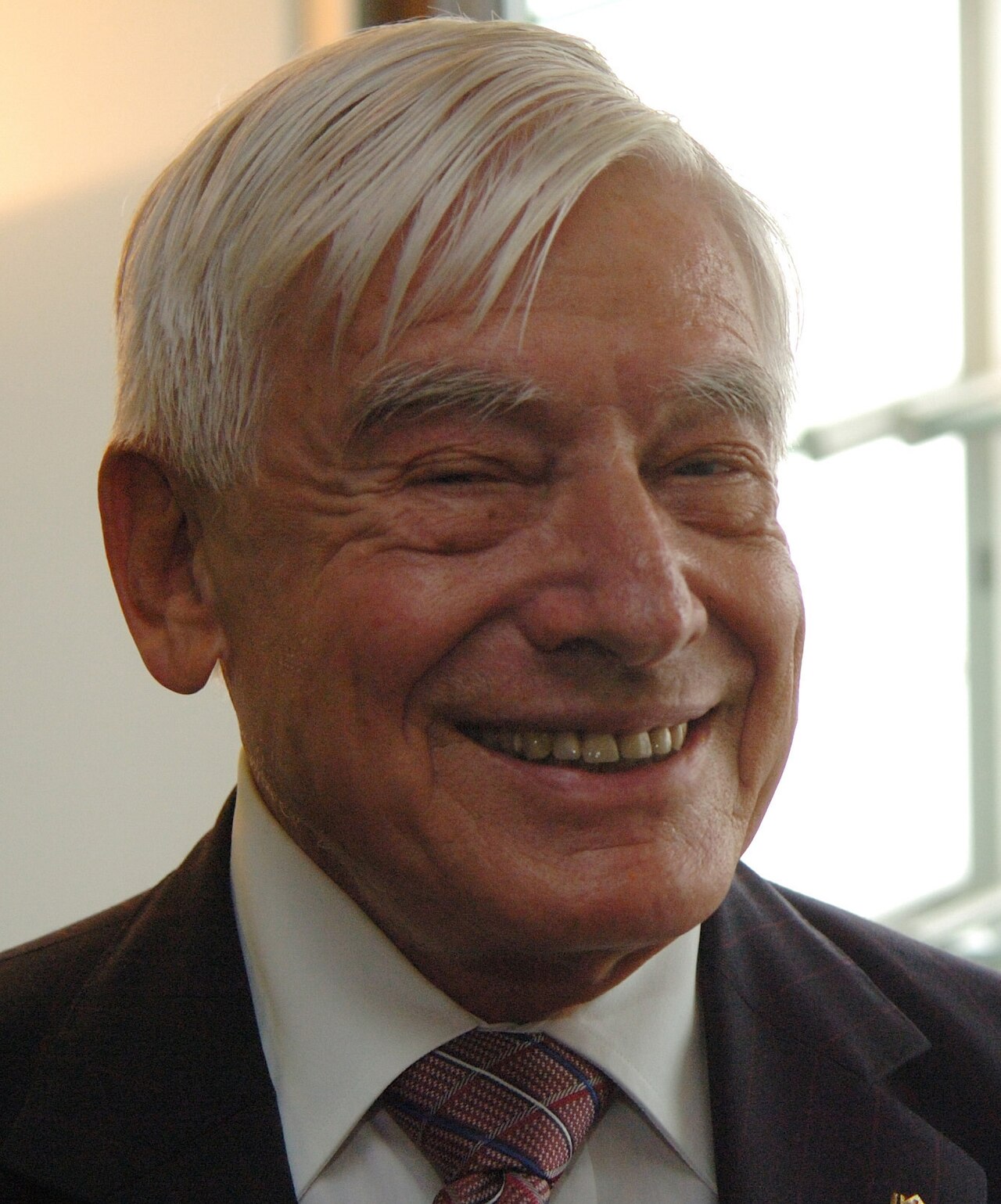
Christian Schwarz-Schilling: A Life Defined by Vision and Principle, from Telekom Reform to Bosnia Peacemaking
The political landscape of Germany and the complex narrative of international diplomacy recently mourned the passing of a remarkable figure, Christian Schwarz-Schilling. The former German Federal Post Minister, a statesman whose career spanned decades of transformative change, died on Easter Monday at the age of 95. His death, confirmed by long-time friend and CDU Bundestag member Michael Brand, occurred peacefully amidst his family in Büdingen, Hesse. The news of Schwarz Schilling Tot resonated across Germany and beyond, marking the end of an era championed by a man who was both a telecommunications pioneer and a tireless peacemaker in the heart of Europe.
Schwarz-Schilling’s life was a testament to the power of principle and foresight. Born in Innsbruck on November 19, 1930, to a family of accomplished musicians – his father a composer, his mother a pianist – he inherited a keen sense of harmony, which he later applied to policy and diplomacy. Though adept at the piano and organ himself, his intellectual curiosity led him to study history and Sinology in Berlin after high school. This academic foundation, coupled with a practical banking apprenticeship, provided him with a unique blend of historical perspective and economic acumen. His subsequent marriage into an entrepreneurial family in Büdingen further cemented his connection to the practical world of business, which would profoundly influence his political career.
The Architect of a Digital Revolution: Reforming German Telecommunications
Christian Schwarz-Schilling joined the Christian Democratic Union (CDU) at the age of 30, quickly distinguishing himself within the traditionally conservative Hessian state association as a liberal counterweight. His early recognition as an expert in new media foreshadowed the monumental task he would undertake: nothing less than the modernization of Germany's state-controlled telecommunications system. From 1976, as a member of the Bundestag, he vigorously championed the cause of private broadcasting, laying the philosophical groundwork for increased competition and choice in media.
His appointment as Minister for Post and Telecommunications in 1982, following the end of the social-liberal coalition, placed him at the helm of a reform movement that would redefine Germany's digital future. For years, Schwarz-Schilling orchestrated a complex, often controversial, process to prepare the ground for the privatization of Deutsche Post and Deutsche Telekom. At the time, the Bundespost was a monolithic, state-run entity that dictated everything from telephone services to mail delivery. Schwarz-Schilling's vision was to dismantle this monopoly, introduce competition, and unleash innovation, ideas that were revolutionary in a Germany accustomed to extensive state control.
This path was not without its detractors. He faced significant criticism, including accusations of blurring the lines between private and official interests. However, his unyielding commitment to opening up the market ultimately transformed Germany's telecommunications landscape, paving the way for the robust, competitive, and technologically advanced infrastructure we see today. His reforms were a bold gamble, but one that undeniably propelled Germany into the digital age, fostering economic growth and offering consumers unprecedented choice and efficiency. It was a strategic foresight that few possessed at the time, underscoring his legacy as a true reformer. For a deeper dive into his impact on German infrastructure, explore Germany's Ex-Post Minister Schwarz-Schilling Dies: A Look at His Legacy.
A Principled Departure: From Bonn to the Balkans
Despite his significant achievements in telecommunications reform, Schwarz-Schilling's political journey took an unexpected turn. He sensed his support from then-Chancellor Helmut Kohl (CDU) waning, particularly as his reformist zeal continued to challenge established norms. More critically, he became increasingly embittered by what he perceived as the German government's inaction in the face of the escalating civil war in the disintegrating Yugoslavia. His principled stance against this perceived political paralysis ultimately led to his dismissal in late 1992—a rare act of defiance by a minister against his own chancellor that highlighted his unwavering moral compass.
This pivotal moment marked a dramatic shift in his career. The former minister for domestic infrastructure now turned his considerable energies to foreign affairs, human rights, and humanitarian aid within the Bundestag. It was a role in which he would carve out his second, equally significant, legacy. His frequent trips to the Balkans during this tumultuous period earned him international respect, as he witnessed firsthand the devastating human cost of the conflict. This deep personal engagement laid the foundation for his crucial work as a peacemaker.
Schwarz-Schilling's willingness to sacrifice his ministerial post for a matter of international principle speaks volumes about his character. It demonstrates a profound conviction that transcended partisan politics and placed human suffering and global responsibility at the forefront. His journey from overseeing telephone lines to brokering peace in war-torn regions is a powerful testament to the multifaceted nature of impactful public service.
Bosnia's Dedicated Peacemaker: A Decade of Diplomacy
The culmination of Christian Schwarz-Schilling's dedication to humanitarian causes arrived in April 1995 when he was officially appointed as a mediator for Bosnia-Herzegovina. In this role, he focused intensely on the critical and sensitive issue of the return of civil war refugees – a monumental task vital for post-conflict reconciliation and stability. His efforts to help displaced families rebuild their lives provided a tangible, human face to the often abstract world of international diplomacy.
His commitment deepened further towards the end of 2005 when he was appointed the United Nations High Representative for Bosnia-Herzegovina, a powerful international oversight position responsible for ensuring the implementation of the Dayton Peace Agreement. Shortly thereafter, he also assumed the role of EU Special Representative for Bosnia. These appointments solidified his position as a central figure in the fragile peace process, tasked with navigating the intricate web of ethnic tensions between Muslims, Croats, and Serbs.
Schwarz-Schilling's tenure as High Representative was marked by persistent effort in the face of immense challenges. While he could not completely resolve all underlying ethnic and political tensions – a task arguably beyond any single diplomat – his sustained presence and tireless advocacy were invaluable. He worked meticulously to foster dialogue, strengthen democratic institutions, and promote reconciliation, demonstrating the critical importance of long-term commitment in post-conflict zones. The original intention was for the High Representative post to be dissolved upon the completion of his term, but the international community recognized the ongoing necessity of the mandate, extending it beyond its planned end. In mid-2007, he gracefully handed over his duties to the Slovak diplomat Miroslav Lajčák, concluding over a decade of dedicated service to the region.
His unwavering commitment to peace was recognized at the end of 2007 when he received the prestigious Hessian Peace Prize for his profound engagement in the Balkan conflict. His work in Bosnia remains a powerful example of the complexities of nation-building and reconciliation, offering invaluable lessons on the persistence required for international mediation. For a comprehensive look at his dual impact, read From Privatizing Telekom to Balkan Diplomacy: Schwarz-Schilling's Impact.
A Lasting Legacy: Reforms, Diplomacy, and Vision
Christian Schwarz-Schilling’s passing marks the departure of a statesman whose contributions left an indelible mark on both Germany and the international stage. His career was characterized by a rare combination of practical expertise, intellectual rigor, and an unwavering moral compass. From modernizing Germany’s archaic telecommunications infrastructure, propelling it into the digital age, to dedicating years to the painstaking work of peace and reconciliation in Bosnia, his life was one of relentless purpose.
The CDU, in a tribute shared on X, remembered him as an "outstanding personality and a politician with foresight, principled loyalty and a tireless commitment to economic prosperity and international understanding." This succinct description captures the essence of a man who was not afraid to challenge the status quo, whether it meant privatizing state monopolies or confronting political inaction in the face of humanitarian crises. His willingness to take a principled stand, even at personal career cost, distinguishes him as a leader of rare integrity.
His legacy in telecommunications continues to influence Germany's competitive market, while his diplomatic efforts in Bosnia serve as a powerful reminder of the enduring need for dedicated international engagement in complex conflicts. The news of Schwarz Schilling Tot is not just an obituary; it's a reflection on a life that profoundly shaped policy, advanced technology, and tirelessly pursued peace.
Conclusion
Christian Schwarz-Schilling's journey from a musician's son to a pivotal political figure and international peacemaker exemplifies a life dedicated to transformative change. His bold reforms of the German telecommunications sector laid the foundation for modern connectivity, while his principled stance against apathy and his tireless work for peace in Bosnia-Herzegovina underscored his deep humanitarian convictions. As Germany and the world remember Christian Schwarz-Schilling, we reflect on a legacy defined by courage, vision, and an unwavering commitment to a better future, both at home and abroad. His impact will continue to resonate for generations, reminding us of the profound difference one individual, driven by integrity and foresight, can make.