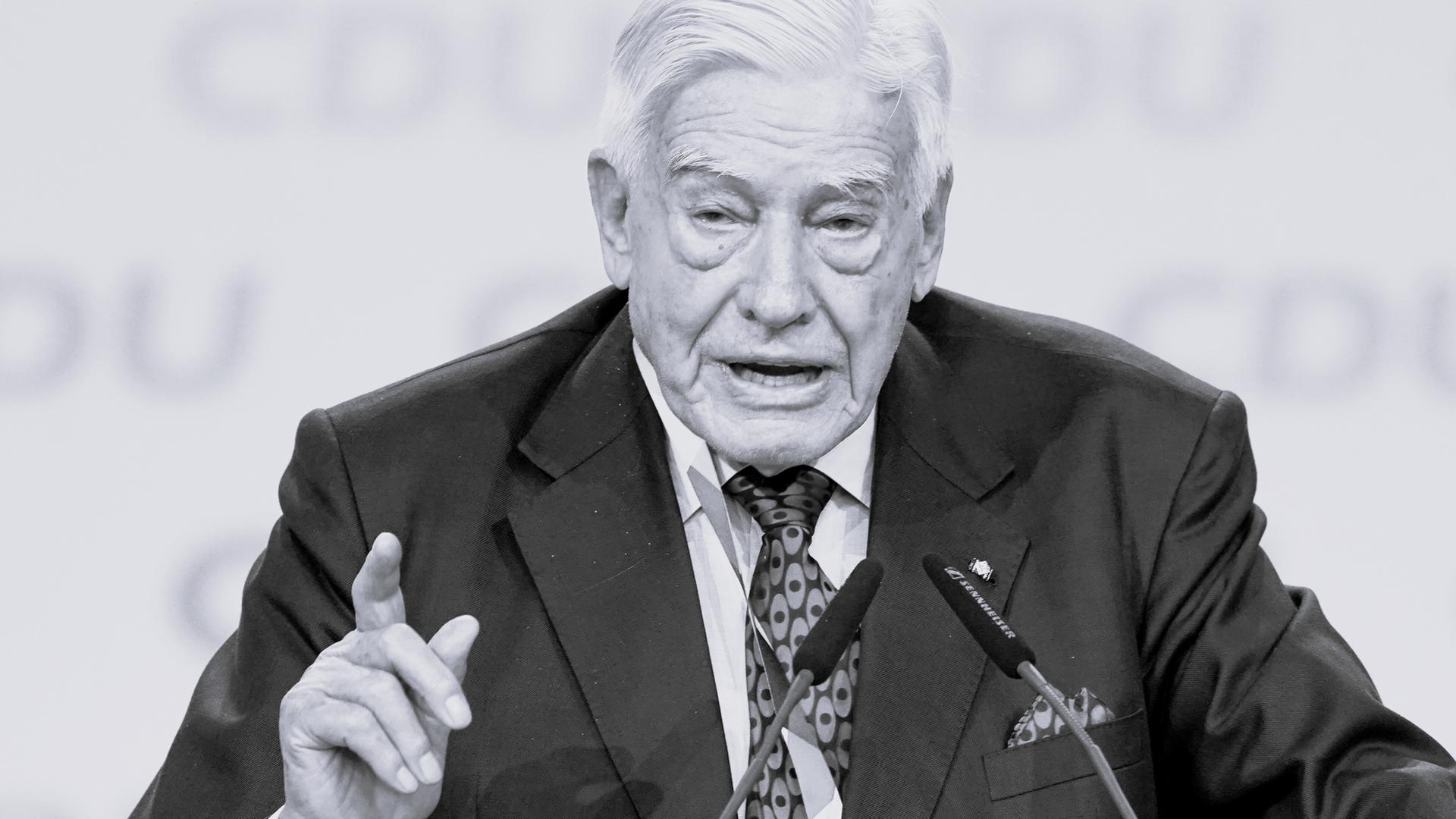
A Life Defined by Principle: Christian Schwarz-Schilling's Dual Legacy in Germany and the Balkans
The political landscape of Germany and the complex peace-building efforts in the post-Yugoslav Balkans were shaped by few individuals as uniquely as Christian Schwarz-Schilling. The news of Schwarz Schilling Tot, announced on Easter Monday at the age of 95, marks the passing of a statesman whose career spanned transformative economic reforms and deeply personal diplomatic interventions. Born on November 19, 1930, in Innsbruck to a family steeped in music ��� his father a composer, his mother a pianist – Schwarz-Schilling cultivated a broad intellectual foundation, studying history and Sinology before embarking on a banking career and marrying into an entrepreneurial family in Büdingen, Hesse. His multifaceted background prepared him for a remarkable trajectory, from spearheading the privatization of Germany's telecommunications sector to becoming a tireless advocate for peace and human rights in Bosnia-Herzegovina.
His story is one of unwavering conviction, often challenging the status quo, and demonstrating that a profound commitment to one's beliefs can transcend conventional political roles. Schwarz-Schilling's impact on two seemingly disparate fields – domestic economic modernization and international conflict resolution – paints the portrait of a leader driven by both vision and conscience. This article delves into the pivotal moments of his career, exploring how he navigated the intricacies of German bureaucracy and the volatile dynamics of the Balkans, leaving an indelible mark on both.
The Architect of Modern German Telecommunications: A Bold Visionary
Christian Schwarz-Schilling's entry into politics in 1960, joining the Christian Democratic Union (CDU), quickly established him as a distinctive voice. Within the largely conservative Hessian CDU state association, he emerged as a liberal counterweight, demonstrating an early aptitude for foresight, particularly concerning new media. His journey from a Bundestag member in 1976 to the Minister for Post and Telecommunications in 1982, following the collapse of the social-liberal coalition, positioned him at the helm of a critical and contentious reform process. He was a vocal proponent for the introduction of private broadcasting, a battle he championed long before taking ministerial office, driven by a belief in market liberalization and increased consumer choice.
As Minister, Schwarz-Schilling embarked on what would become one of the most significant economic transformations in post-war Germany: laying the groundwork for the privatization of the Post and Telekom. This was no small feat, challenging a deeply entrenched state monopoly and bureaucracy. His reforms paved the way for a competitive telecommunications market, fundamentally altering how Germans communicated and connected with the world. While today we take digital connectivity for granted, the vision to break up a massive state enterprise like Deutsche Post and Deutsche Telekom was revolutionary at the time. It fostered innovation, spurred economic growth, and ultimately contributed to Germany's standing as a technologically advanced nation.
However, such a monumental undertaking was not without its critics. Schwarz-Schilling faced significant opposition and accusations of "intermingling private and official interests" (Verquickung privater und dienstlicher Interessen). These criticisms, often fueled by the radical nature of his proposals, highlighted the friction between traditional state control and a burgeoning liberal economic philosophy. Despite the backlash, his reforms undeniably set Germany on a path towards modern, privatized communication networks, a legacy that continues to influence the country's infrastructure and economy. His unwavering belief in the necessity of these changes, even at the cost of political comfort, showcased a rare commitment to his convictions.
A Principled Stand: From Post Minister to Balkan Peacemaker
The controversies surrounding Telekom privatization gradually eroded Schwarz-Schilling's standing with then-Chancellor Helmut Kohl. Yet, a far more profound disagreement would ultimately redefine his career. Schwarz-Schilling became increasingly frustrated and embittered by what he perceived as the inaction of German politics in the face of the brutal civil war unfolding in the disintegrating Yugoslavia. He felt a moral imperative to act, contrasting sharply with the cautious approach of the German government.
This deep-seated conviction led him to publicly challenge the government's stance, ultimately provoking his dismissal from office in late 1992. Far from retreating from public life, this dismissal marked a pivotal transition. The former Post Minister redirected his formidable energy towards foreign affairs, human rights, and humanitarian aid within the Bundestag. His frequent travels to the Balkans, driven by a profound empathy for the victims of the conflict, earned him international respect and recognition as a voice of conscience.
His dedication culminated in his official appointment as a conflict mediator for Bosnia-Herzegovina in April 1995. In this critical role, he focused particularly on facilitating the return of civil war refugees, a challenging and emotionally charged task requiring immense diplomatic skill and sensitivity. This period highlighted a profound shift in his public service, moving from the intricate details of economic policy to the deeply human and often heartbreaking realities of post-conflict reconstruction and reconciliation. His journey from the corridors of economic power to the troubled landscapes of the Balkans highlights a rare commitment to principle, a theme further explored in articles like Christian Schwarz-Schilling, Telekom Reformer & Bosnia Peacemaker, Dies at 95. It underscores the profound impact of individual conviction in shaping both national and international destinies.
Navigating the Tensions: Schwarz-Schilling's Diplomatic Marathon in Bosnia
The pinnacle of Christian Schwarz-Schilling's commitment to the former Yugoslavia arrived in late 2005, when he was appointed the United Nations High Representative for Bosnia-Herzegovina. This role, considered the international community's chief civilian official in the country, granted him extensive powers to implement the Dayton Peace Agreement. Shortly thereafter, he also assumed the position of EU Commissioner for Bosnia, further cementing his influence in the region. His appointments underscored the international community's trust in his impartiality and his deep understanding of the complex ethnic and political tapestry of Bosnia.
However, even with extensive powers and profound dedication, the challenges were immense. Bosnia-Herzegovina remained a fragile state, grappling with deep-seated tensions between its constituent communities: Bosniaks (Muslims), Croats, and Serbs. Schwarz-Schilling faced the formidable task of promoting reconciliation, building stable institutions, and encouraging sustainable peace in a country still scarred by war and divided by ethnic and political grievances. While he made significant strides in various areas, the deeply entrenched divisions proved resilient.
Despite his tireless efforts, Schwarz-Schilling himself acknowledged that he could not "completely resolve" the tensions. This reality was highlighted by the fact that the post of High Representative, originally slated for dissolution upon the completion of his term, had to be extended by the international community, a testament to the ongoing fragility and the persistent need for external oversight. He handed over his challenging mandate to Slovak diplomat Miroslav Lajčák in mid-2007, leaving behind a legacy of dedicated service to peace. For his unwavering commitment to resolving the Balkan conflict, he was deservedly awarded the prestigious Hessian Peace Prize (Hessischer Friedenspreis) at the end of 2007. Readers interested in the intricate details of his diplomatic endeavors and overall contributions can delve deeper into Germany's Ex-Post Minister Schwarz-Schilling Dies: A Look at His Legacy.
Enduring Legacy and Lessons Learned
Christian Schwarz-Schilling's life journey offers a compelling narrative of principled leadership, demonstrating a rare ability to excel in vastly different domains. His legacy is dual: that of a crucial economic reformer who modernized Germany's telecommunications, and that of a dedicated peacemaker who devoted years to stabilizing post-conflict Bosnia. These two facets, seemingly disparate, are united by a common thread: his "foresight, adherence to principles, and tireless commitment to economic prosperity and international understanding" (Weitsicht, Prinzipientreue und einem unermüdlichen Einsatz für wirtschaftlichen Wohlstand und internationale Verständigung), as remembered by the CDU.
His career teaches invaluable lessons about political courage. Schwarz-Schilling was unafraid to challenge established norms, whether in advocating for a market-driven telecommunications sector against a state monopoly or in confronting his own government's perceived inaction on humanitarian crises. He represented the ideal of a statesman who prioritizes long-term vision and moral duty over short-term political expediency. His role as a "liberal counterweight" within a conservative party further underscores the importance of diverse perspectives and critical thinking within political structures.
For current and aspiring leaders, Schwarz-Schilling's life exemplifies the power of sustained engagement in complex issues. His dedication to Bosnia, even after leaving ministerial office, showcased a profound understanding that true change, particularly in nation-building and reconciliation, requires enduring commitment, patience, and a willingness to confront difficult truths. His ability to build trust and navigate sensitive political landscapes, despite the inherent challenges, remains a testament to effective diplomacy rooted in genuine human concern. His contributions resonate even today, reminding us of the intricate balance between national interests and global humanitarian responsibilities.
The passing of Christian Schwarz-Schilling is a moment to reflect on a remarkable career that left an indelible mark on both German domestic policy and international peace efforts. From the controversial but ultimately transformative privatization of Telekom to his courageous and compassionate diplomacy in the Balkans, Schwarz-Schilling consistently demonstrated a statesman's vision and a humanitarian's heart. His unwavering commitment to his convictions, even when unpopular, secured his place as a figure of immense respect. As we remember his life and legacy following the news of Schwarz Schilling Tot, we are reminded of the enduring power of principle in public service and the profound impact one individual can have on the course of history.