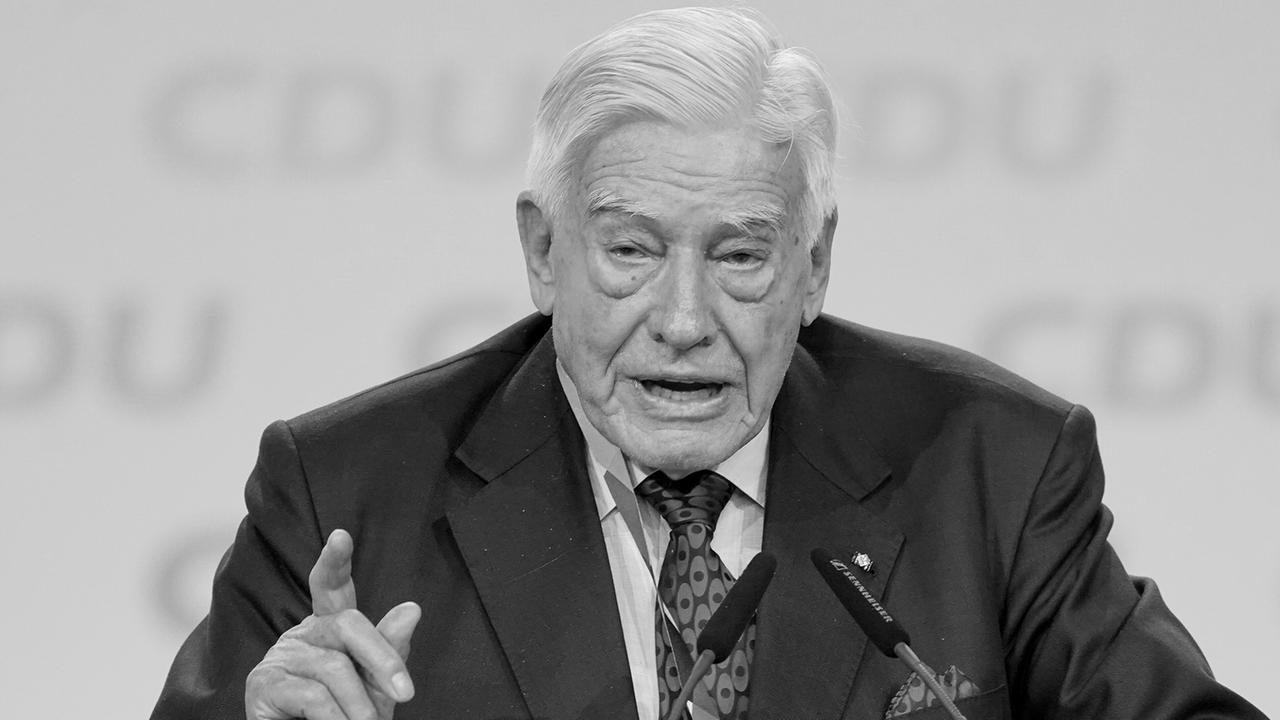
Germany Bids Farewell to Christian Schwarz-Schilling: A Visionary's Enduring Legacy
Germany is mourning the passing of Christian Schwarz-Schilling (CDU), the former Federal Post Minister, who died on Easter Monday, April 1st, at the age of 95. Schwarz-Schilling's death, confirmed by close friend and CDU Bundestag member Michael Brand, occurred peacefully surrounded by his family in Büdingen, Hesse. The news marks the end of an extraordinary life dedicated to public service, encompassing groundbreaking reforms in telecommunications and relentless diplomatic efforts for peace in the Balkans. His passing, denoted by the phrase "Schwarz Schilling Tot," resonates across Germany, prompting reflections on a career defined by both innovation and unwavering principle.
Born on November 19, 1930, in Innsbruck, Schwarz-Schilling inherited a deep appreciation for the arts from his composer father and pianist mother, becoming an accomplished musician himself on both piano and organ. This cultural foundation laid a unique path for a man who would later delve into the intricacies of history and Sinology at university in Berlin. After a banking apprenticeship and marrying into a prominent entrepreneurial family in Büdingen, his journey took a decisive turn towards politics, setting the stage for a career that would profoundly shape modern Germany.
The Architect of Modern German Telecommunications
Christian Schwarz-Schilling's entry into politics at the age of 30 saw him join the Christian Democratic Union (CDU), where he quickly established himself as a forward-thinking, liberal voice within the often-conservative Hessian state chapter. His early expertise in new media became a defining characteristic, particularly his fervent advocacy for the introduction of private broadcasting in Germany. This struggle, which began during his tenure as a Bundestag member in 1976, was not merely about expanding media options; it was a fundamental challenge to the state-controlled media landscape, envisioning a more diverse and dynamic information environment for the nation.
Upon the dissolution of the social-liberal coalition in 1982, Schwarz-Schilling was appointed Minister for Post and Telecommunications, a role that would etch his name into Germany's economic history. It was here that he embarked on a monumental and often controversial reform process: the privatization of Deutsche Post and Deutsche Telekom. At a time when state-owned enterprises dominated these sectors, Schwarz-Schilling's vision was revolutionary. He laid the groundwork for a competitive market, believing that privatization would foster efficiency, innovation, and better services for German citizens.
This transformation, however, was not without its critics. Schwarz-Schilling faced significant opposition and accusations of conflicts of interest, with some suggesting a blurring of lines between his private entrepreneurial background and his official duties. Yet, his perseverance ultimately set Germany on a path towards a modern, liberalized telecommunications sector that continues to thrive today. His reforms paved the way for the digital age, influencing everything from communication infrastructure to economic growth. For a deeper dive into this pivotal period, readers can explore his contributions in
Christian Schwarz-Schilling, Telekom Reformer & Bosnia Peacemaker, Dies at 95.
A Principled Stand: From Domestic Policy to International Diplomacy
Despite his significant achievements in telecommunications, Christian Schwarz-Schilling's political career took an unexpected and defining turn in late 1992. His relationship with then-Chancellor Helmut Kohl (CDU) reportedly began to sour, partly due to the ongoing criticisms surrounding his privatization initiatives. However, the more profound catalyst for his departure was his profound disillusionment with Germany's perceived inaction regarding the escalating civil war in the disintegrating Yugoslavia.
Schwarz-Schilling was deeply disturbed by what he viewed as the international community's, and particularly Germany's, reluctance to intervene decisively in the face of widespread atrocities. His frustration with the political inertia became unbearable, leading him to provoke his own dismissal. This courageous act of resigning on principle, rather than compromising his moral convictions, spoke volumes about the man. It signaled a shift from the technicalities of domestic policy to the urgent moral imperatives of international humanitarianism.
After leaving his ministerial post, Schwarz-Schilling did not withdraw from public life. Instead, he channeled his energy within the Bundestag towards foreign affairs, human rights, and humanitarian aid. It was in this capacity that he began frequent travels to the Balkans, immersing himself in the complex realities of the conflict and earning significant international respect for his dedicated engagement. His unwavering commitment to human dignity and peace, even when it meant standing against the prevailing political tide, exemplified his character.
A Legacy of Peace in the Balkans: The High Representative
Schwarz-Schilling's profound engagement with the former Yugoslavia culminated in a pivotal appointment in April 1995, when he was officially named a mediator for Bosnia-Herzegovina. In this critical role, he dedicated himself to the arduous task of regulating the return of civil war refugees, a cornerstone of post-conflict reconciliation and stability. His efforts were instrumental in helping countless individuals rebuild their lives and fostering a fragile sense of normalcy in a shattered region.
His deep understanding of the Balkan complexities and his tireless diplomacy did not go unnoticed. As a testament to his expertise and dedication, Schwarz-Schilling was appointed the High Representative of the United Nations in Bosnia-Herzegovina in late 2005. This prestigious and demanding position placed him at the forefront of international efforts to implement the Dayton Peace Agreement and stabilize the war-torn nation. Shortly thereafter, he also assumed the role of EU Commissioner for Bosnia, further solidifying his critical influence in the region.
The challenges he faced were immense. Despite his relentless work, the deep-seated tensions between Muslims, Croats, and Serbs proved incredibly difficult to fully resolve. The initial plan was for the High Representative's mandate to conclude with his term, but the international community recognized the fragility of the situation and was compelled to extend the mandate, acknowledging the continued need for strong leadership and mediation. In mid-2007, Schwarz-Schilling handed over his demanding office to the Slovak diplomat Miroslav Lajčák, concluding over a decade of dedicated service to the region. His tireless commitment to fostering peace and stability in the face of profound adversity was recognized later that year when he was awarded the prestigious Hessian Peace Prize. His journey from transforming German infrastructure to mediating international conflict showcases an extraordinary versatility and a deep humanitarian spirit, a journey eloquently detailed in
From Privatizing Telekom to Balkan Diplomacy: Schwarz-Schilling's Impact.
Enduring Influence and Final Tributes
Christian Schwarz-Schilling’s life was a testament to the power of foresight, principle, and dedicated action. He seamlessly bridged seemingly disparate worlds: the technical intricacies of telecommunications reform and the complex, emotionally charged arena of international diplomacy. His ability to innovate and challenge the status quo in German domestic policy was matched only by his profound moral compass that guided his humanitarian efforts abroad. He was a rare blend of a pragmatic reformer and a passionate advocate for human rights.
The CDU, his political home for decades, honored his passing with a poignant tribute on X (formerly Twitter), remembering him as "an outstanding personality and a politician with foresight, principled integrity and an untiring commitment to economic prosperity and international understanding." This statement encapsulates the dual pillars of his legacy: the foundational work he did to modernize Germany’s economy and media landscape, and his courageous, compassionate stand for peace and justice on the global stage. From his early life steeped in music and academia, through a successful business career, to his transformative roles in German politics and Balkan peacemaking, Schwarz-Schilling's journey was marked by a consistent pursuit of betterment—be it for German citizens through advanced infrastructure or for the peoples of Bosnia through diplomatic engagement.
In his final years, his wisdom and experiences continued to offer valuable perspectives on contemporary challenges, reflecting a lifelong engagement with the critical issues of his time. The phrase "Schwarz Schilling Tot" might mark his physical passing, but it also signals the time for a deeper appreciation of the indelible mark he left on both his country and the world.
Conclusion
Christian Schwarz-Schilling leaves behind a remarkable and multifaceted legacy. As Germany's Federal Post Minister, he was the architect of monumental reforms, fearlessly steering the privatization of Deutsche Post and Telekom and laying the digital foundations for modern Germany. His vision transformed the nation's infrastructure, fostering competition and innovation. Yet, his impact extended far beyond domestic policy. Driven by a deep moral conviction, he transitioned into an esteemed international diplomat, tirelessly working for peace and reconciliation in the war-torn Balkans, culminating in his crucial role as the UN High Representative in Bosnia-Herzegovina. His passing at 95 is a moment to reflect on a life distinguished by courageous principle, intellectual breadth, and an unwavering commitment to both progress and peace. Christian Schwarz-Schilling's life serves as a powerful reminder of how a single individual, armed with foresight and integrity, can profoundly influence national development and international relations.